Homeowners' pick for appliance repair across California
Stove & Range Repair — Book a Visit Today
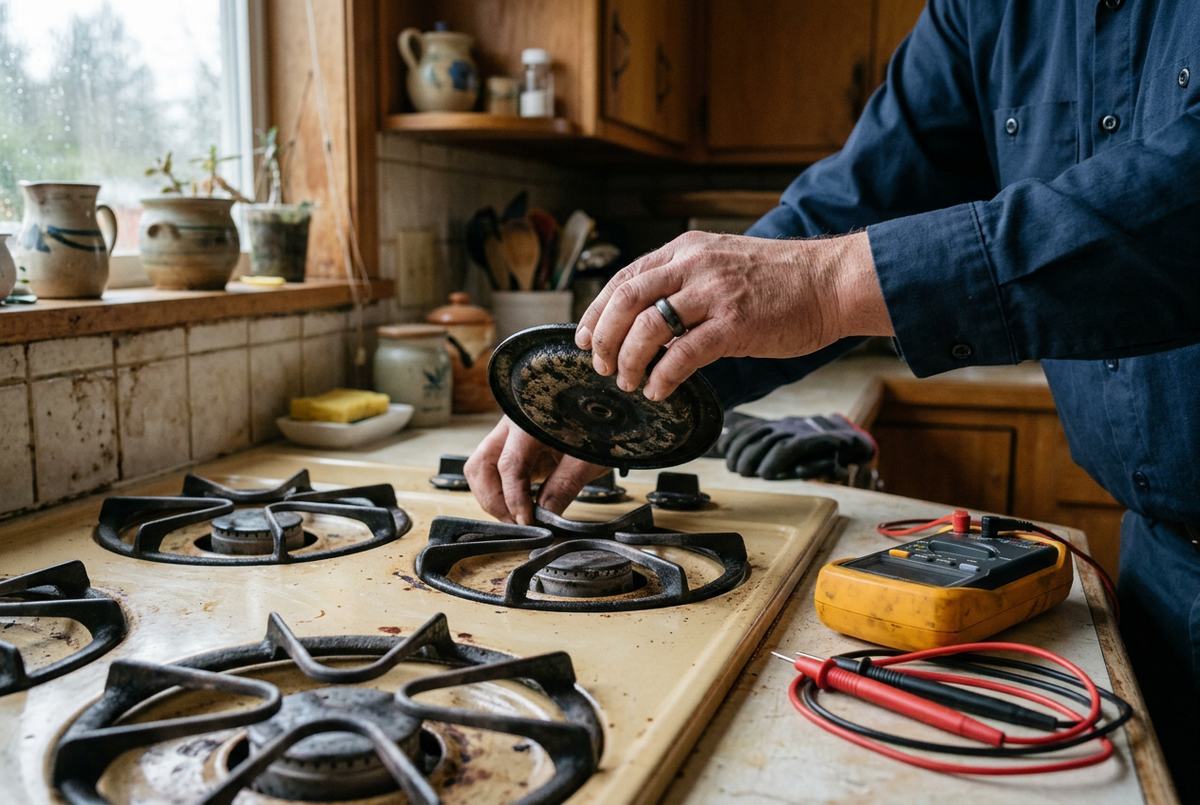
We repair gas, electric, dual-fuel, and induction ranges across California, so call us and tell us what happened. Most failures land in a few places: igniters that glow but never light, burner valves clogged from years of boil-overs, radiant elements that fail open, and control boards that lose track of temperature. Gas ranges also drift out of adjustment, which shows up as yellow flames or a faint gas smell after ignition. Our visit starts with questions, then live testing at the burner or element. We check voltage, continuity, gas pressure where it applies, and the wiring behind the console. You hear what part failed and why before any work begins. Describe what you saw and smelled when you call. That usually tells us which parts to bring.
Call (888) 352-5066- Real people on the phone
- 7 days a week
- Quote in writing before any work
Taking calls until 5:00 PM PT
The stove & range symptoms we hear most
- The burner clicks and clicks but won't light Spark igniter or electrode fouled by spillover, or a weak spark module
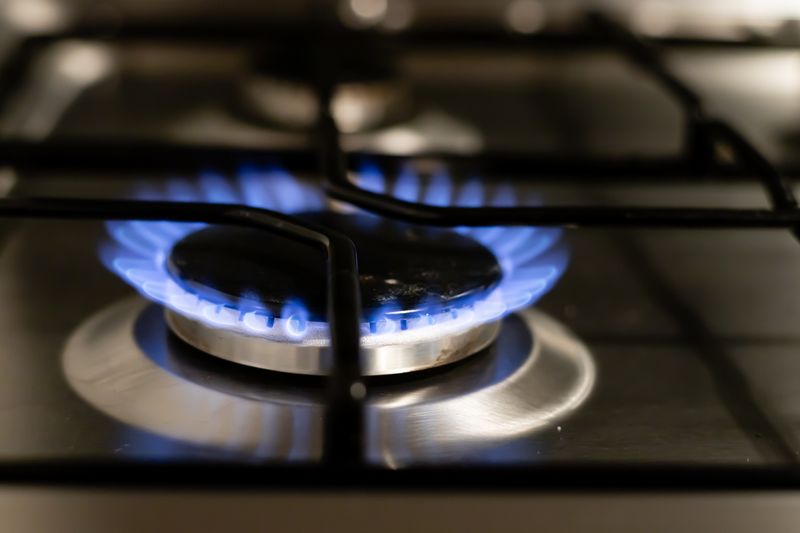
- Flames are yellow and leaving soot on my pot Air shutter out of adjustment, clogged burner ports, or wrong orifice for the gas type
- One coil stays cold, the rest heat fine Open surface element, burnt receptacle, or a failed infinite switch
- Oven runs hot and burns the bottom of everything Drifting temperature sensor, miscalibrated control, or a stuck bake relay
- Glass top burner cycles on and off nonstop Limiter tripping from a cracked cooktop, poor pan contact, or a failing element sensor
Safe things to check first
Worth a look before you call — sometimes it saves you the visit.
- 1
Why homeowners pick a local independent shop
| CK Repair | Big-box repair chains | Handyman listings | |
|---|---|---|---|
| Written quote before any work | ✓ | ✕ | ✕ |
| Phones answered by people, every day | ✓ | ✕ | ✓ |
| Every major brand, gas or electric | ✓ | ✓ | ✕ |
| Independent shop, nobody's quota | ✓ | ✕ | ✓ |
| Crews familiar with homes like yours | ✓ | ✕ | ✓ |
Homeowners on how the visit went
“They handled the warranty paperwork questions I could not figure out, then did the repair after it lapsed.”
Hank M.San Mateo, CA“Same-week slot, clear arrival window, text when the tech was twenty minutes out.”
Ivy N.Compton, CA“The quote explained what failed and why, in plain words. I actually understood my own dishwasher for once.”
Wade F.Ventura, CAStove & Range Repair — quick answers
My gas range stopped working after a power outage. Why?
Modern gas ranges need electricity for ignition and controls, and after an outage the board can lock up. Unplug the range for five minutes, then plug it back in. If burners still won't spark or the oven stays dark, the board or igniter module needs testing.
Is a faint gas smell ever normal?
A brief whiff right at ignition can happen. A smell that lingers, or one you notice when nothing is on, is not normal. Shut the gas valve, open windows, leave, and call your gas utility first. Then call us for the repair.
Can you fix a cracked glass cooktop?
The glass gets replaced, not patched. Cracks let moisture reach the elements and wiring underneath, which causes shorts and nuisance shutoffs. We check whether the elements and limiters survived, since those often need attention at the same time.
Why does my oven take so long to preheat now?
On electric ranges, a weakening bake element or one failed leg of power slows heating badly. On gas, a tired igniter draws current but never reaches the temperature that opens the gas valve. Both are testable in one visit.
Should I repair a range that is fifteen years old?
Often yes. Older ranges use simpler, sturdier parts, and burners, switches, and elements are usually available. We tell you what failed and whether the rest of the range looks sound, so you can decide with real information.
Do you work on dual-fuel and induction ranges?
Yes. As an independent shop we service gas, electric, dual-fuel, and induction ranges from all major brands. Induction faults usually trace back to cooling fans, power boards, or coil sensors, so we bring test gear rather than guessing.
How it works
- Step 1
Tell us the symptom
Call us or fill out the form, then describe what you hear, smell or see. Odd noise, standing water, no heat. Have the model number handy if you can reach it.
- Step 2
We schedule a visit
Pick a window that fits your day. We confirm the address and ask a few questions first so the van carries parts that commonly fail on your machine.
- Step 3
Diagnose and repair
Our technician tests the machine, explains what failed and lays out your repair options. Many jobs finish the same visit. If a part has to be ordered, we schedule the return before we leave.
- A real person answers
- Open 7 days
- Written quote before work starts
Why homeowners call us
- Hard water knowledgeSacramento Valley minerals scale up heating elements, valves and spray arms. We look for buildup, not just broken parts. Clearing scale and swapping clogged components keeps a dishwasher or washer from failing the same way again.
- Heat pump dryersNewer heat pump dryers dry differently, and they fail differently. Clogged condensers, blocked drains, long cycle times, all of it has a cause. We service these units and vented models too, and we tell you what the machine needs.
- Statewide coverageWe are based in North Highlands and work across California. Coastal humidity, valley heat and desert dust each stress appliances in their own way, so we factor local conditions into the diagnosis instead of guessing.
- Straight answersSome machines are worth repairing and some are not. We tell you which, based on the failed part, the age of the unit and what else is likely to go next. Then you decide.
- All major brands, gas & electricOne independent crew for Whirlpool, Samsung, GE, LG, Maytag, Bosch and more.
- Straight answersWhen a repair doesn't make sense, we tell you, sometimes before we even roll a truck.
Stove & Range Repair
Small faults become big ones on a schedule of their own
Describe the symptoms and we'll book the visit — takes about a minute.
- A real person answers
- Open 7 days
- Written quotes
- All major brands
- Gas & electric
Rather not call? Get a free quote →